Artificial intelligence and future of capitalism from a Marxist, and a neoclassical, point of view

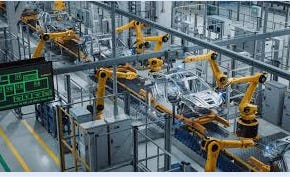
What would be the likely effects of massive introduction of artificial intelligence in the economy, from the Marxist point of view? Interestingly, this question, as far as I know, has not been asked.
At first, the implications for Marx’s labor theory of value seem bad or in contradiction with the facts or our expectations. AI implies the introduction of extremely capital-intensive techniques of production, or to use Marxist terminology, of processes with a very high organic composition of capital. In other words, AI implies very high c/v ratio. That is the ratio of constant capital (c) to capital engaged to hire labor (v). If the presence of labor is small, and perhaps in cases of fully automated production, close to zero, the surplus value produced by labor must also be small or close to zero. Regardless of how high the rate of exploitation is, a very small v implies a very small s (surplus value). We thus establish that the rate of profit (s/(c+v)) must also be very small, consistent with one of Marx’s most famous “laws of capitalist development”, namely tendency of the profit rate to fall with the introduction of more capital-intensive processes of production. In the case of almost wholly automated production, the rate of profit must become zero or be near zero. As Marx, Schumpeter and common sense tell us, capitalism with zero profits is an absurdity. Capitalists will not invest if their expected return is zero. Thus, the tendency of the rate of profit to fall spells the doom of capitalism.
Much before the AI appeared on the scene this was the idea discussed by the early 20th century Marxist economists like Rosa Luxemburg and Henryk Grossman. They expected precisely what we observe today: that by introducing more capital-intensive processes of production, which for each individual capitalist as he or she introduces them, are more profitable, capitalists as a class, when they all do so, displace living labor, reduce the amount of surplus value, and thus as a result drive their own profit rate (for all capitalists as a whole) down to zero.
So will the AI bring capitalism to an end? This does not seem to square well with the facts and expectations of not smaller, but higher, rates of profits that would come from the introduction of AI. Was Marx entirely wrong? Perhaps not.
To see that consider the economy composed of two sectors. First, the sector with very high organic composition of capital, exactly as we have described it. But now allow that total automatization of production in this sector creates a demand for production of goods and services such that only live human labor can do, or where live human labor is superior to AI: think of caring activities, sports, nursing, top cooking skills, coach training, bar tenders, creative writing and multitude of other tasks that, precisely because some of them may be done in a rough way by the AI, will become ever more valuable when done by skilled, real live human labor. Thousands of teachers may be replaced by the AI but the demand for really good teachers, who can beat the AI, will increase.
Then, a second sector, the very opposite of the fully automated sector, will develop. It would be characterized by low organic composition of capital: constant capital (c) would be small relative to variable capital (i.e., to the amount of engaged capital paid in form of wages). It would, unlike the automated sector, generate a huge amount of surplus value.
But as we know, in capitalism, commodities and services are not sold at labor values, but at the prices of production which equalize profit rates in capital- and labor-intensive sectors (i.e., in sectors with different organic compositions of capital). This, in turn means, that the amount of profit in the automated sector will, in equilibrium, be proportional to the (huge) amount of capital employed in the automated sector. Therefore, our automated sector’s profit will not be negligible as it seemed at first when we looked at it in isolation and assumed that the entire economy is composed of it only. On the contrary, the profit rate may go up because replacement of labor in one sector is accompanied by the creation of more labor intensive processes of production elsewhere.
To put it simply: while one part of the economy will work only with machines (where under the term of machine I include the AI), another part of the economy will be much more labor intensive, probably even more so than today. This in turn means that profits in the AI sector may be high—but only if the growth of the AI sector is accompanied by rising demand for goods and services produced by live labor and thus by the emergence of that, second, sector. If the AI sector takes the entire economy, then according to Marxist analyses, the profit rate must tend toward zero. And even under the neoclassical analysis that would be the case, because a fully automated production that does not employ labor at all implies total wages of zero or close to zero, and it becomes unclear to whom the bonanza of new production could be sold. Thus, the AI-generated abundance leads, in a neoclassical world too (absent a huge redistribution to people who do not work), to insufficient aggregate demand, and consequently to the profit rate close, or equal, to zero. In the neoclassical world, as in Marxist world, the rise of AI must be accompanied by an equivalent rise in labor intensive activities in order to keep the economy in equilibrium and not to drive the aggregate demand and the profit rate down to zero.
To summarize: in both Marxist and neoclassical worlds, an economy composed of highly automated sector only is incompatible with the maintenance of capitalism. In one case because the produced surplus value and thus profit is zero; in the other case, because insufficient aggregate demand leads to profits of zero. The situation can be “saved” only by an equivalent rise of a labor-intensive sector or by massive redistribution to people who do not work.
Thus, we see less dismal future for labor that some people argue. Activities where labor cannot be substituted by the AI will blossom. Will AI bring an overall deskilling of labor or not? At first sight, it seems that the AI will lead to deskilling of labor simply because many skills (such as computing, software development, writing, even math) will be redundant as they may be taken over by machines. Yet, this process may be, and is likely to be, counterbalanced by the creation of occupations where labor skills will exceed today’s level simply because they would have to be superior to the skill levels produced by the AI in order for people to want to purchase such products and services. Therefore, while one part of the labor force may suffer from deskilling, or to call it frankly, from the dumbing-down, another part of the labor force will get more sophisticated and much more skilled. To stay ahead it will have to compete with machines more than with the other humans. But so long as we believe in human adaptation, we can think that there would be always a segment of such labor that would do things that the machines cannot do, or even where the same output is produced by both, it will more appreciated (and hence more valued) if done by live labor rather than by the AI. An AI-generated equally beautiful ice-skater is unlikely to be as much appreciated as a human ice-skater. At least, by the humans.
PS. In the piece, I have used the terms of “increased capital intensity of production” and “higher organic composition of capital” interchangeably. The first is, of course, a neoclassical, the second a Marxist term, but in this context they both express the same thing: machines (including AI) replacing humans.
It is not true that a world without human wages is a world without capitalism or profits. As Kalecki showed, profits are equal to investment plus capitalist consumption. After the initial shock of an aggregate demand loss, a new equilibrium would be possible based only on capitalist consumption.
Historically, of course, we have seen automation push people into services, and AI is likely to contribute to this trend. However, if AI becomes an immiserating force through outcompeting humans for jobs, then it will be capitalist consumption, rather than wages which sustain this demand for services.
The only thing necessary for there to be a tendency for the rate of profit to fall is a rising investment rate (of gross investment as a share of gross profit), something which has been historically correlated with the development of the productive forces. The US has been unwilling to have rising investment rates under neoliberalism in order to preserve its capitalist class, and hence has undermined its productive forces and increased rent seeking. And the less infrastructure and factories you have, the less use you'll have for AI to begin with. Already we're seeing the finance world hesitate about how the fixed capital expenditure is affecting the free cash flow of major tech companies, I suspect they'll be unable to endure it much longer.
At least regarding the issue of AI's effect on the economy from a Marxist point of view, this is something that I have written about before:
https://cosmonautmag.com/2023/05/artificial-intelligence-universal-machines-and-killing-bourgeois-dreams/
As well as the rate of profit dynamics I mentioned above:
https://cosmonautmag.com/2026/04/the-capitalist-in-the-21st-century/
The two-sector framework opens a cultural dimension that I think makes the model even richer than you've stated it here. The human-premium sector depends on consumers carrying a culturally transmitted preference for human authenticity, the ice-skater valued more precisely BECAUSE a human is performing. That preference was formed in a world where all output was human by default. The fascinating question your model raises is whether it reproduces across generations or slowly attenuates.
A generation raised on AI-generated content from age five is forming aesthetic preferences within an AI-saturated environment from the start. If your baseline sense of what good writing, music, performance and cooking feels like was shaped by AI output, the perceived gap between human and machine quality may never fully register. Which means the size of sector two could be generationally variable, large for cohorts who carry pre-AI cultural architecture, potentially much narrower for cohorts whose preferences were formed entirely within it. thats a demographic dimension to the equilibrium that makes the transition dynamics even more interesting to model, because sector two's long-run viability depends not just on redistribution but on whether the cultural preference that sustains it is durable or quietly depreciating across generational cohorts.