A pedagogical tax
Why the rich should be uber-taxed

I have not discussed the proposed Zucman tax so far. I am not in general a huge fan of trying to solve every income or wealth inequality problem by taxation. But two recent developments have led me to think again and support strongly the Zucman tax and perhaps to argue to make it even tougher.
The rationale of the tax is not that it would significantly dent the wealth of the rich; nor would it collect huge revenues.
But it would convey a message. It is a tax against greed. It is a pedagogical tax.
What are the two recent events that made me think again?
The first is the review by Andrea Capussela of my Great Global Transformation. It re-brought my attention on the last chapter of my book entitled “Nationalism, greed and property”. Andrea wrote quite a lot on it, and expanded the discussion further. (Andrea’s review’s title is “Impeccable, and unacceptable portrait of our world”. I suggest that you read it.) Interestingly, this is also the only part of the book discussed by Martin Wolf in his brief review of the book in The Financial Times.
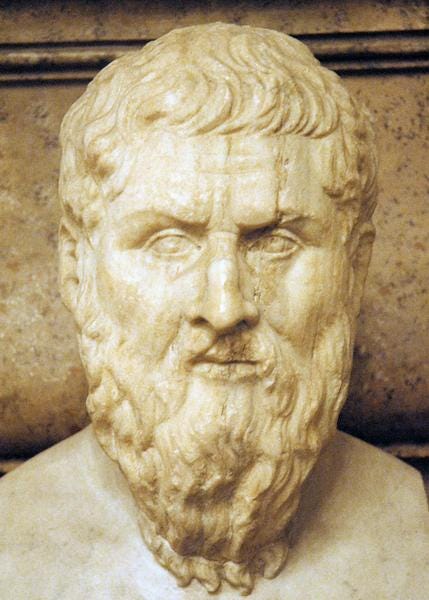
I have, to some extent, even forgotten about it because my book (or 95% of it) is about other things. The last chapter is only five or six pages long. Greed (pleonexia) plays a key role there though. (Pleonexia is also discussed beautifully in David Lay Williams’ recent book The Greatest of all Plagues). Pleonexia is a greed without any upper bound. It is not based on intrinsic pleasure provided by consumption of goods and services. Its utility comes from elsewhere. It is extrinsic: admiration of the others. Here is what I wrote in The Great Global Transformation:
Things possess an indirect utility because they convey to the others the image of wealth and power of the owner. Since the image of wealth and power is not bounded from above– that is, does not have any physical limits (unlike, for example, food or clothing one can consume over a given period of time) – it becomes what is commonly called greed, the pleonexia of Plato and the Greeks, the all-consuming and never assuageable greed. Greed is extrinsic. It cannot be ascertained or judged from within, in the sense that one cannot objectively claim that the increase in the number of commodities owned above a certain limit does not bring additional utility. The utility it brings comes from an external spectator who, by being made aware or acknowledging our ownership of things, validates it, confirms that they are useful to us, and makes us want to have more so that the validation may be even stronger. Ubiquitous use of smartphones to take photos of the most trivial activities or events in one’s life fulfils that function: it commodifies time, and that new commodity acquires its value only extrinsically, when it is shown to others. Taking pictures of our own lunches or walks in the woods and keeping them for ourselves is wasteful. It brings nothing, or almost nothing, in addition to the potential pleasure one gets from the activity itself. But sharing it with others brings the recognition of either one’s wealth or, perhaps more importantly, of one’s happiness. Having one’s happiness confirmed by others is one of the features of greed. Pleasure is no longer contained in the activity or good itself, but in the appreciation by others of the happiness that the activity or the good are supposed to have brought to us. Matters can go even further: activities that bring no utility, or that are even chores, but can be presented as happiness, obtain their value precisely from that presentation, and not from any intrinsic quality. I may dread or be extremely bored by listening to classical music, but if I can send a picture that shows me attending an important or expensive performance (and ostensibly being happy even when feeling miserable), the utility that comes from the conviction that others see me as happy will be sufficiently strong to overwhelm my boredom during the performance itself. Greed is the ‘motor’ that drives our obsession with property since its acquisition is seen to be the ultimate objective – not only because of the hedonistic pleasure it gives, but because it shows the worth of an individual. Greed is, as Marx defined it, ‘abstract hedonism’.
The anti-greed pedagogical tax would, by cutting wealth of the inordinately rich, just by a little, send the message that society is not wholly oblivious of, or indifferent to, extreme greed, and to power and vanity that accompany such wealth, and make its possessors objects of (misplaced) adoration.
And provide them with a feeling of impunity.
Here then comes the second event which made me think again: the Epstein affair. The impunity with which the wealthy have behaved calls for some (however feeble) social constraint. Zucman tax would be one such modest constraint.
On top of it, I thought of a social credit system for all billionaires. If you do certain things well, you will be taxed less; if you do awful things (even if they are seemingly legal), your tax will be increased.
Social credit system would be an effective way to subject the behavior of the enormously wealthy to social scrutiny. There would no longer be meaningless Davos declarations that they “pledge” their fortune to charitable causes and similar fake and unimplementable plans. Did not Mark Zuckerberg give away 99 percent of his wealth? Had we ever heard of that “pledge” after the day it was made and reported by the media?
Here, social credit system would be real. Behave with a minimum of decency, or be taxed. It would be a pedagogical tool. Call it “the anti-Epstein social credit system”.
PS. How would the social credit system for the billionaires look? Here is the main idea. You want to limit billionaires’ (1) ostentatious consumption, (2) political influence, and (3) media power. The need to limit (or thus to punish by exorbitant taxation) ostentatious consumption is to maintain a society where huge differences in wealth, while some may be unavoidable, are not displayed in front of everyone and cannot become the object of adoration or of hate. The goal of (2) is to make billionaires (which despite everything will still have disproportionate political influence) more like other members of community or nation. We are not talking here of democracy but of isonomia, a much better term to indicate an approximately equal influence of all individuals in political decision-making. Today’s so-called democracies are places without any semblance of isonomia precisely because the political power of the rich is unconstrained. Finally, (3) is needed for the same reason as (2): to limit the power of a few.
Now, here is a possible price list.
If you fly too many times per year by private jets, take private yacht voyages or spend too many days in exclusive resorts (all of which can be readily defined), you are taxed by between 1 and 2 percent of your net wealth.
If you contribute any amount in excess of $1,000 to any political cause (whether directly to a politician for campaign or to a lobbying firm or to an NGO), you can do that, but depending on the tax schedule, you may be changed between 1 and 5 percent of your net wealth.
If you contribute any amount in excess of $1,000 to any media organization or if you own a media organization (like Bloomberg, The Washington Post, The Atlantic or X/Twitter), you will be taxed by between 1 and 5 percent of your net wealth.
If you contribute more than $100,000 to any non-political educational, health or cultural cause, you may get a tax discount (again depending on the amount and the case) between 1 and 3 percent of your net wealth.
Dear Branko,
You reach for the Greeks. Pleonexia. The unbounded greed that validates itself through the eyes of others. You are right to do so.
But you stopped too soon.
Aristotle's akolastos—the intemperate man—does not commit excess because he reasons poorly. He commits excess because his character has been deformed by habit and environment. He cannot see his condition because the condition itself has blinded him. Shame requires self-awareness. The intemperate have none.
Two cages, not one vice.
The modern billionaire is not merely victim to his own appetites. He is prisoner to a Nash equilibrium that punishes defection.
If every other billionaire extracts, hoards, and fights taxation, the one who voluntarily pays more is not a hero. He is a sucker. His shareholders sue. His board demotes him. His competitors devour his market share. His peers mock him at Davos—behind his back, then to his face.
Socrates understood: the polis does not produce just men by lecturing them. It produces just men by arranging rewards so that justice pays.
So arrange the rewards.
Tax the activities that harm.
Land speculation. Unrealized gains. Financial extraction. Rent-seeking dressed as innovation. Price the externalities. Make extraction less profitable than production.
And reward the activities that help.
Multiplier effect. Not tax credits for fake charity pledges. Tax credits for verified productive reinvestment: wages above a certain threshold, domestic supply chains, long-term R&D, workforce housing built and held, not flipped. Make the man who builds things richer than the man who extracts them.
You want behavior change? Change the payoffs.
The golden bridge they are already standing on.
You might not be aware that some of them want this.
The Patriotic Billionaires—they exist, they sign letters, they mean it—are standing at the edge of the river, waiting for a bridge. They have been waiting for years. No one builds it. No one even points to the other side. The press covers their pledges for one news cycle and forgets. Politicians take their money and pretend not to hear their public statements. Their peers ignore them.
These men do not need shame. They need an exit ramp that does not require them to confess that the last forty years were a sin.
Aristotle again: habituation works in both directions. Reward justice, and men become just.
What to do instead.
Not a pedagogical tax. Not shame.
Tax extraction. Land speculation. Unrealized gains. Financial engineering. Price the externalities.
Reward production. Wage multipliers. Domestic investment. Long-term R&D. Workforce housing. Make building things pay better than moving money around.
Restore the referees. Campaign finance reform. IRS enforcement. Prosecutorial independence. Sever the line from private fortune to public power.
Build the bridge. Let the willing cross first. Call it legacy. Call it the Buffett Rule. Call it whatever saves face. Their peers will follow.
A pedagogical tax says: You are bad.
A Pigouvian system says: This activity costs society; that activity benefits society. Choose accordingly. give the carrot and the stick.
The addicted do not quit because they are shamed. They quit because they see someone else do it and survive—and profit.
The Greeks knew that justice is not a sermon. It is an architecture.
Build better walls. Build better doors.
As a practical matter, some countries (perhaps small island nations) will be havens for the super-wealthy, not only for allowing them to escape wealth taxation, but also to provide them isolated and gated existences. An unwritten code of plutocracy is a notion of escape velocity, which endows this class separation from lower forms they arose from, and from many inconveniences or friction of existence.
I learned somewhere that the two reasons we imprison humans are (1) hatred for what they are or what they have done, and (2) fear of what they will do if not imprisoned. Branko points to a third, the value as warning to the rest of society not to behave in certain ways. Will this really work? From what I read, this was Xi's policy in the "common prosperity" campaign, though not by taxation. The US used to have anti-trust laws to limit some oligarchy (OK; still on the books, but lax enforcement). Recently I read that Jack Ma has been somewhat rehabilitated.
Is the argument for wealth tax on billionaires doctrinaire (or more extreme, Jacobin)? What about celebrity billionaires such as Taylor Swift, Rihanna, Michael Jordan, and Oprah? Should they be penalized for greed? I read an obituary last year, of Junior Bridgeman, who made his fortune after retiring From basketball, apparently a billionaire. A shrewd and hard-working businessman; at least from the obituary, he did not seem motivated by greed.